
A berry tasty mystery: Identify Different Blackberries with this Visual Guide
This guide will offer visual tools so you can tell the difference between our native berry species and invasive ones. While they are all tasty, it’s important to stop the spread of exotic species for the sake of our local ecosystem.
If you’re new to plant identification or foraging, blackberries in the Pacific Northwest are an easy species to start with.
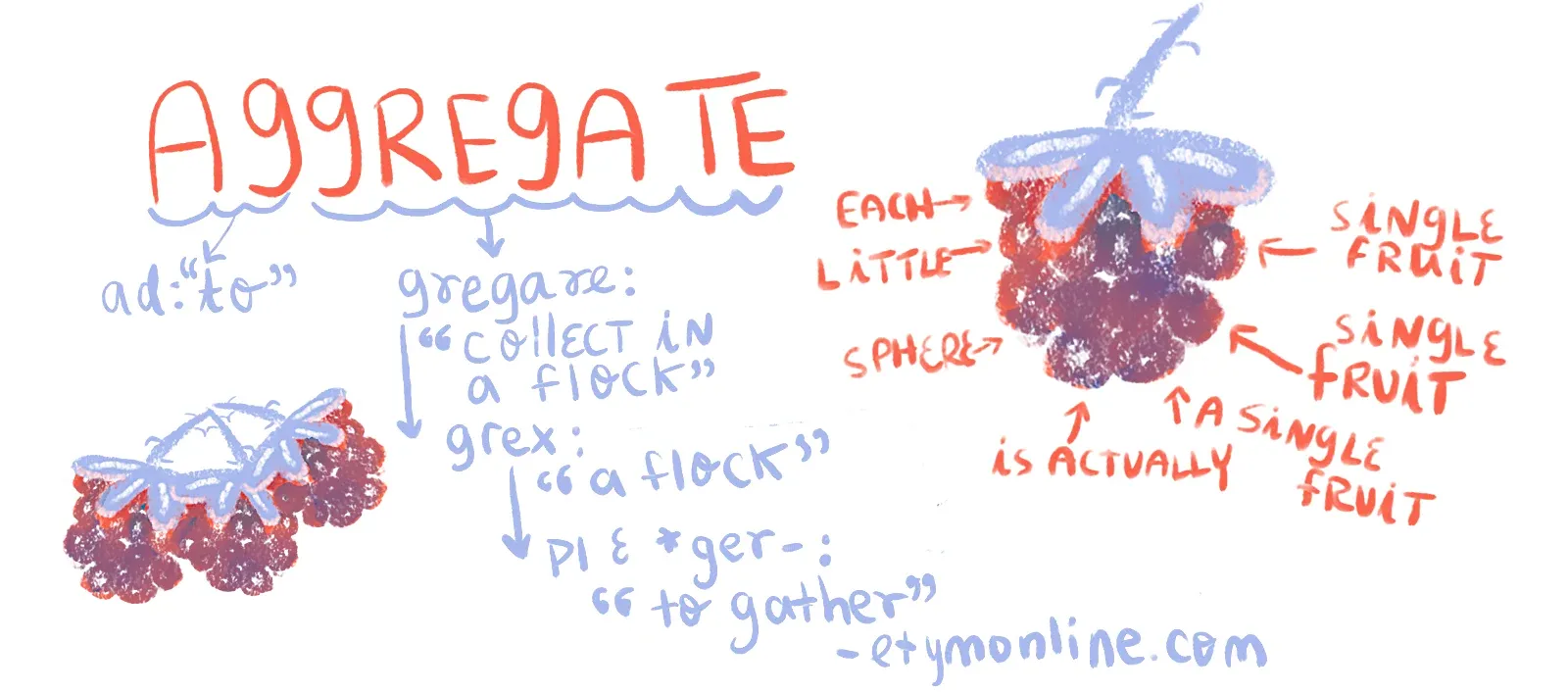
As an aggregate berry - each little sphere on the berry is actually a single fruit - their shape helps set them apart from other berries. Pair that with their thorns, and you have a high level of confidence when noticing them in the wild.
When I first started my foraging journey in the Pacific Northwest, every blackberry looked the same to me.
But over the seasons, I began to notice subtle differences in taste and appearance. This curiosity led me to discover the wide variety of blackberry species, some native and some invasive.
My goats have been a great help in managing the invasive species in my yard.
In this visual guide, I share my PNW blackberry variety chart with you, along with the insights and images you need to become a skilled blackberry identifier.
Gain the right knowledge (and maybe a few prickly defenses) to ensure our wild berries and other native plants thrive in the ecosystem we all love.
Blackberry Quick Facts:
Understanding these botanical nuances not only helps in identification but also deepens your appreciation for the diversity within the Rubus genus.
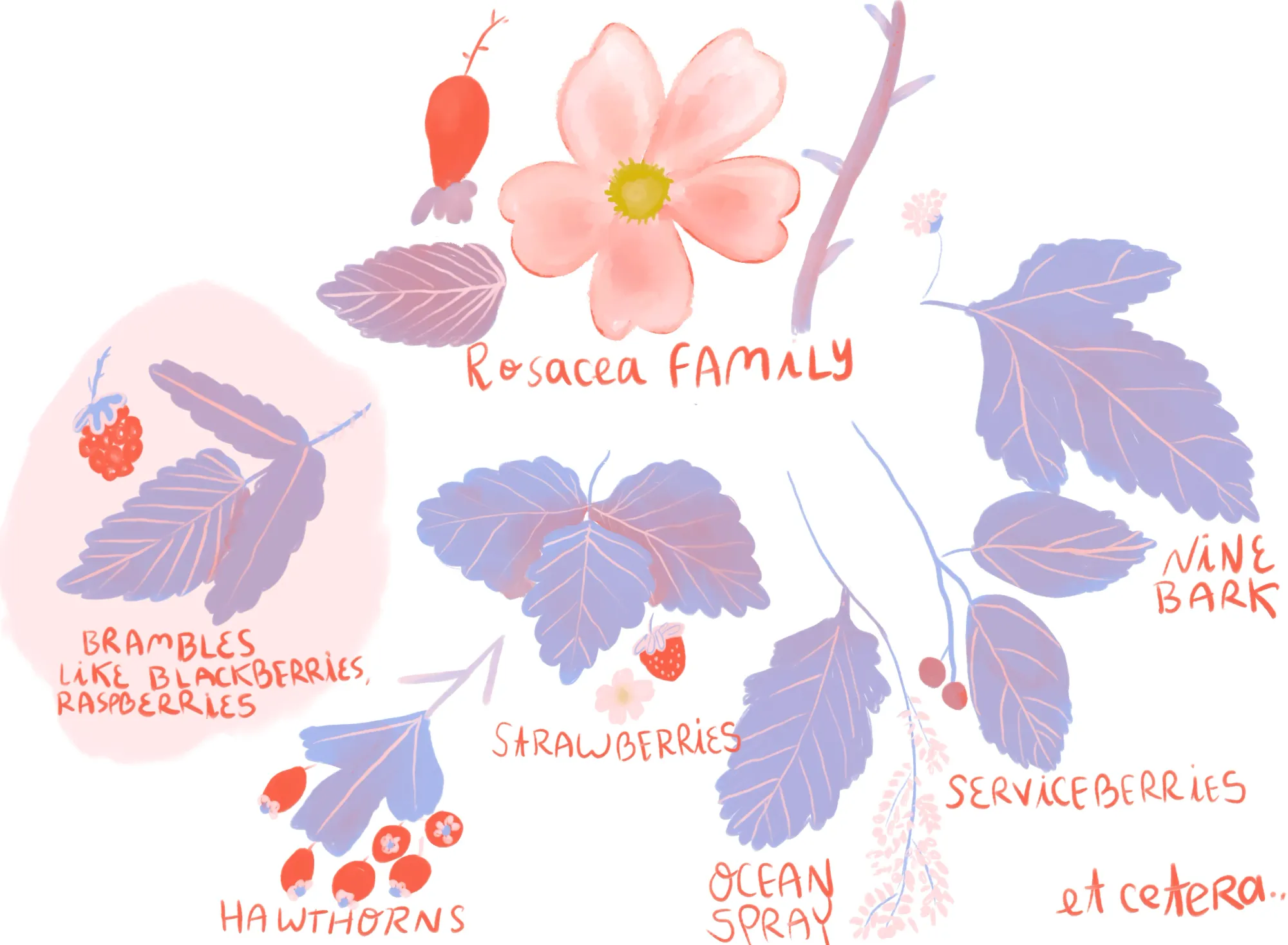
- Family: Roses
- Genus: Rubus
- Other Members of the Rubus Genus: Raspberries, Dewberries, Cloudberries, Arctic Berries, Thimbleberries
- Lifespan: Perennial; Berries develop second year
Source: USDA Forest Service
Blackberry Botanical Names + Etymology
For many of the species we'll cover in this article, their botanical name offers insight to some of their distinguishing features.
| Common Name | Scientific Name | Meaning |
|---|---|---|
| European Blackberry | Rubus vestitus | Vestitus (clothed) - covered or dressed in thick white hairs |
| Cutleaf Evergreen Blackberry | Rubus laciniatus | Laciniatus (lacerated) - deeply cut |
| Giant Himalayan Blackberry | Rubus praecox | Praecox (precocious) - fruit matures early |
| Armenian Blackberry | Rubus armeniacus | From Armenia |
| Himalayan Blackberry | Rubus bifrons | Bi (two) + frons (leaf) - Sometimes called "twice-leaved blackberry," no clear information on this but I like to think of it as an indicator of its two bottom leaves being connected, where the bottom leaf stem is attached to the stem of the middle leaf instead of the main leaflet stem. |
| Elmleaf Blackberry | Rubus ulmifolius | Ulmi (elm) + folius (leaf) |
| Blackcap Raspberry | Rubus leucodermis | Leuco (white) + dermis (skin) - has white bark |
| Trailing Blackberry | Rubus ursinus | Ursinus (bear) - bears love blackberries |
Sources: Missouri Botanical Garden, Else Mikkelsen, Home Orchard Education Center
Key Features of Wild Blackberries in the PNW for Easy Identification
Blackberry Anatomy 101:
| Thorns (Prickles) | Sharp projections from the stem, botanically called prickles with bramble species. |
|---|---|
| Canes | Stems. |
| Primocane | The first year cane which will not produce fruit. |
| Floricane | A second year cane that will create both flowers and fruit. |
| Bloom | Ranging in color from white to pink, depending on the species. |
| Leaves | A single blackberry leaf is split up into smaller leaflets, between three and five leaflets per leaf depending on plant and cane age. |
| Serrated | The edges of the leaves are serrated, or look like a saw or pinking shears. |
| Aggregate | Cluster of small drupelets, or fruits, which we call a singular berry. |
| Drupelet | Each small juicy globe of the berry contains a seed. |
| Torus | The center core of the berry, remains intact on true blackberries (but is removed when picking raspberries). |
| Rachis | The main stem-end on flower clusters. |
Sources: NC State Extension, Native Plant Trust
Wild Blackberry Species Found in the PNW: Visual Identification Guide
Here is the sortable + interactive chart to easily see the different characteristics of each blackberry species that is commonly seen in the Pacific Northwest - both native and invasive species.
Scroll through to see the main distinctions. To learn more about each species and see citations, see more detailed descriptions below. Species with * are native to the PNW
| Species Name | Common Names | Bloom Color | Stem Color | Leaflets | Prickles | Distinguishing Features |
|---|---|---|---|---|---|---|
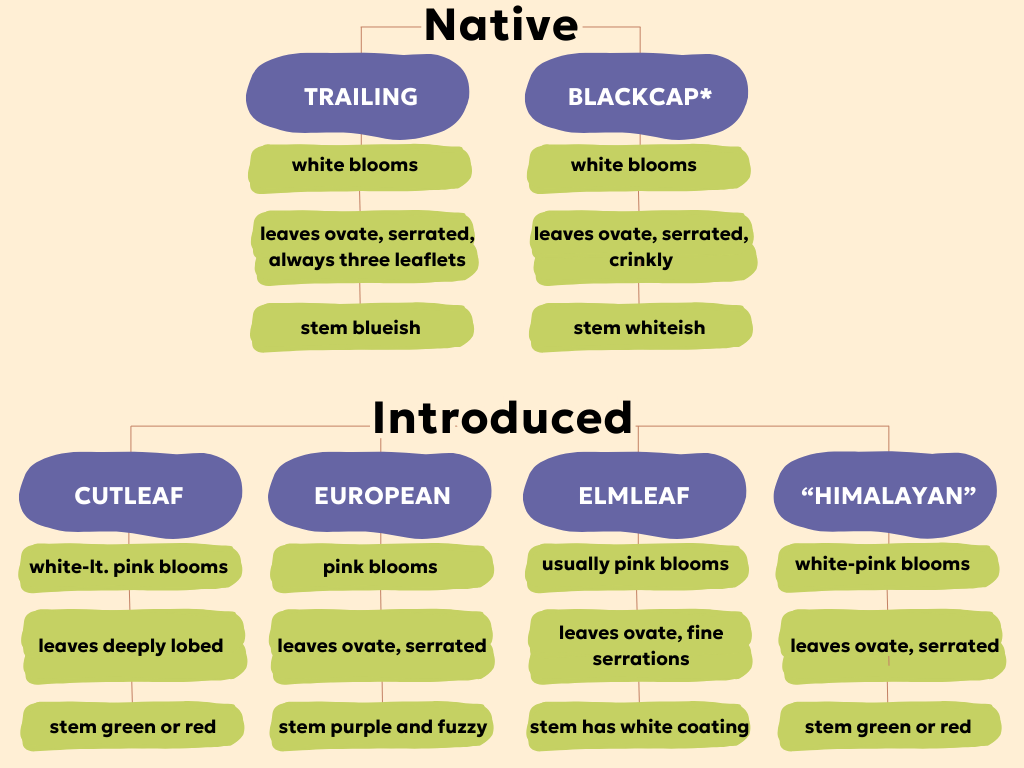
| Rubus ursinus | Trailing Blackberry* | White | Bluish-green (young), brown (old) | 3 | Many, straight, slender, weak | Deciduous leaves in groups of three; ovate leaves |
| Rubus leucodermis | Blackcap Raspberry* | White | Whitish coating on stems | 5 (1st year), 3 (2nd year) | Can have none | Hollow center of berry; shorter than wide, a raspberry |
| Rubus laciniatus | Cutleaf Evergreen Blackberry | White to Soft Pink | Green to Reddish-Purple | 5 | Straight to slightly curved, stiff | Deeply cut leaves with pointed tips; height 8-13 ft |
| Rubus vestitus | European Blackberry | Pink | Brownish-Purple-Red | Varies | Smaller, more numerous thorns | Fuzzy purple stems; long-stipitate-glandular hairs |
| Rubus ulmifolius | Elmleaf Blackberry | Soft to Mid-Pink (can be white) | Fine hairs with white coating | Varies | Stout, can be straight or hooked | May not have prickles; small serrations on edges of leaflets |
| Rubus bifrons | Himalayan Blackberry | Pale pink, bright pink | Five-sided | 5 (mature), 3-4 (immature) | Thin, straight, wider at base tapering off towards top; red at base | Not common on the West Coast; slender prickles on first year canes |
| Rubus armeniacus | Armenian Blackberry | Pale pink | Five-sided | 5 | Stout, red at base | Does not get purple rust; common in the PNW |
| Rubus praecox | Himalayan Giant Blackberry | White, pale pink | Green or reddish-dark purple | 5 | Hooked | Can get purple rust; common in Oregon |
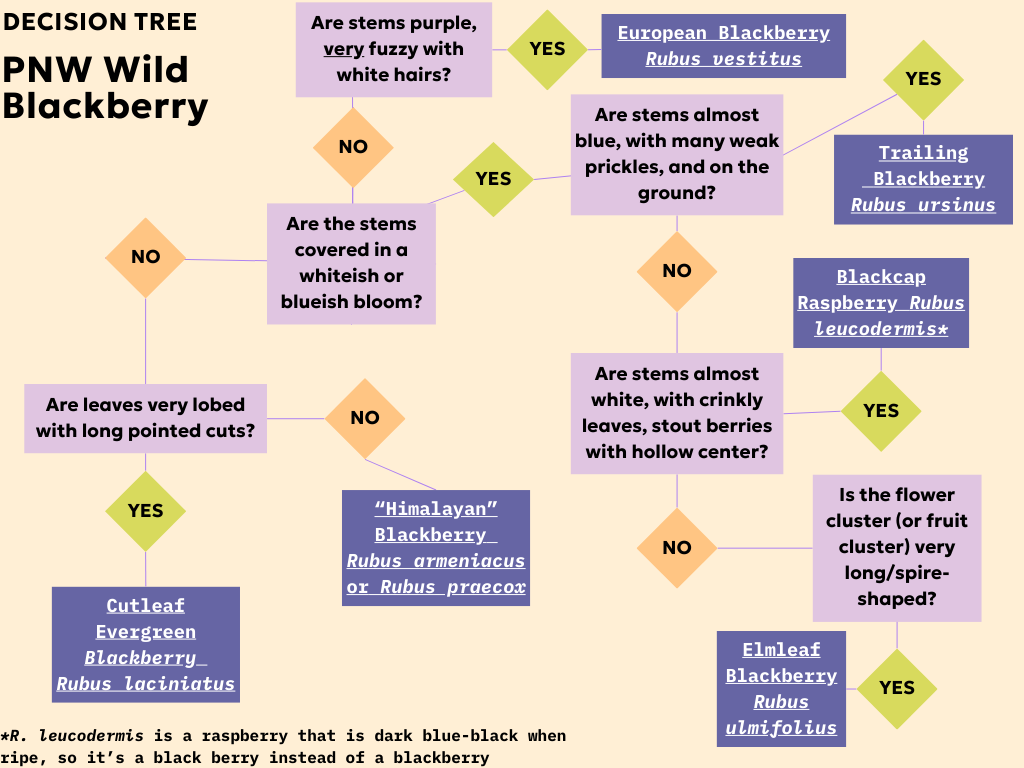
Common and Native Wild Blackberry Species
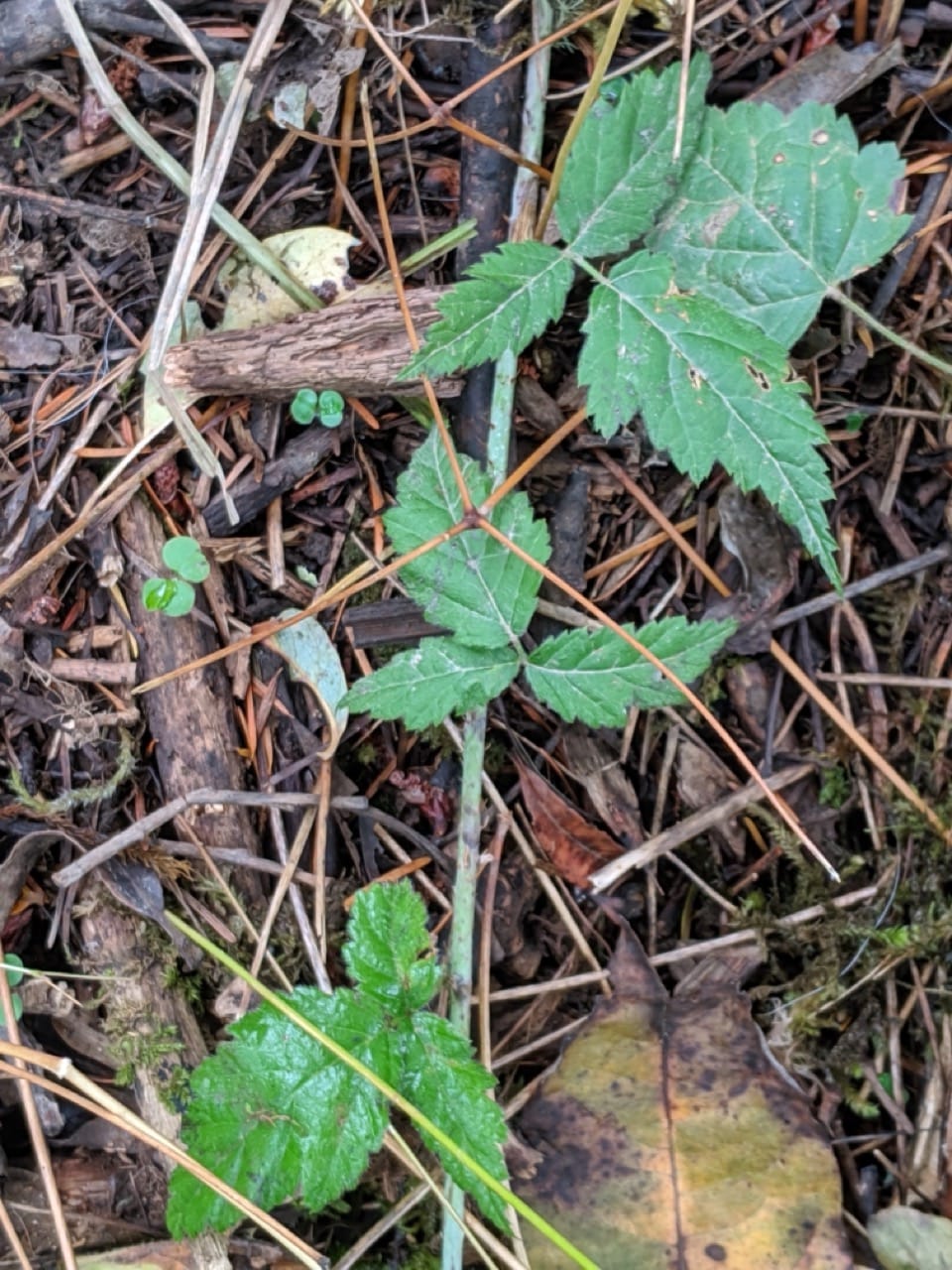
Trailing Blackberry Rubus ursinus:
aka California Blackberry, Douglas berry, Pacific Blackberry, Pacific Dewberry
- Bloom Color: White
- Petals: Lanceolate (oval shaped with pointed tips)
- Stem Color: Bluish-Green when young, brown with age, white waxy coating, tubular (doesn’t have edges/sides)
- Leaflets: 3
- Prickles: Many, straight, slender, weak
- Distinguishing Features: Usually fully on ground , leaves always in groups of three, not evergreen
Sources: Berkley, USDA FS, Burke Herbarium, Canadian Journal of Plant Science
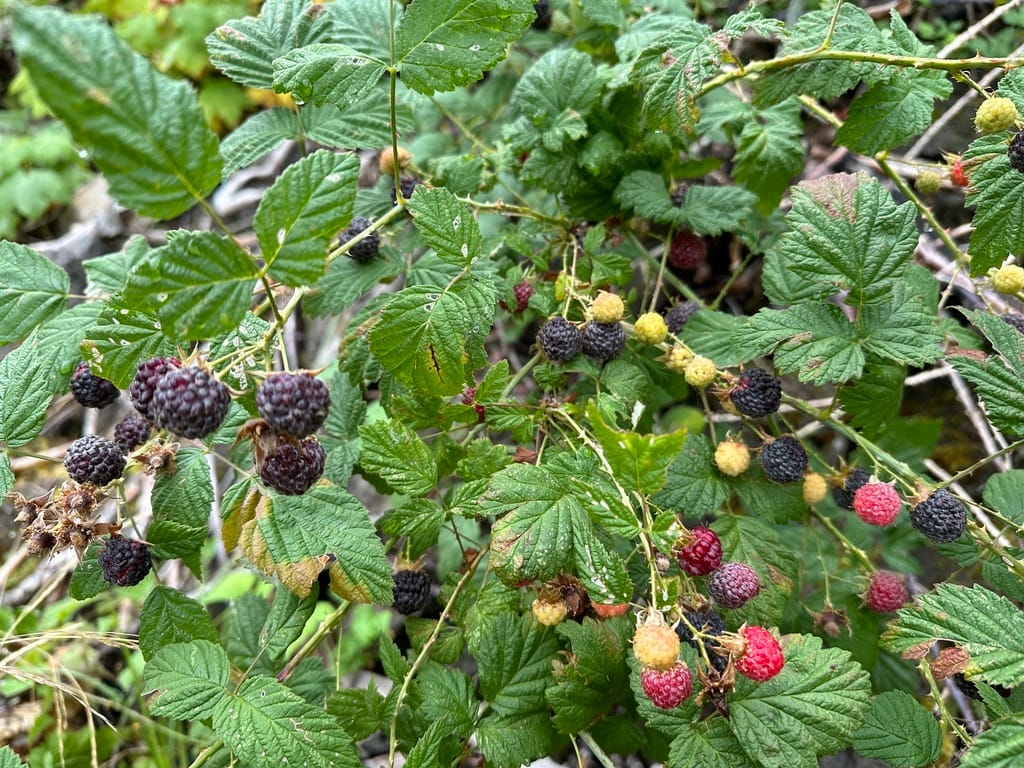
Blackcap Raspberry Rubus Leucodermis:
aka Black Raspberry, Whitebark Raspberry, Western Raspberry
- Note: Not a blackberry, but a black berry
- Bloom Color: White
- Leaflets: first year canes have five leaflets on leaves; second year canes have three leaflets on leaves, leaves have a more crinkled appearance
- Distinguishing Feature: Whiteish coating on stems; center of berry is hollow (unlike a true blackberry); white coating over black berries that are often shorter than they are wide (opposite a true blackberry)
Sources: Oregon State, Calscape
Invasive/Non-Native Wild Blackberry Species in the PNW Region
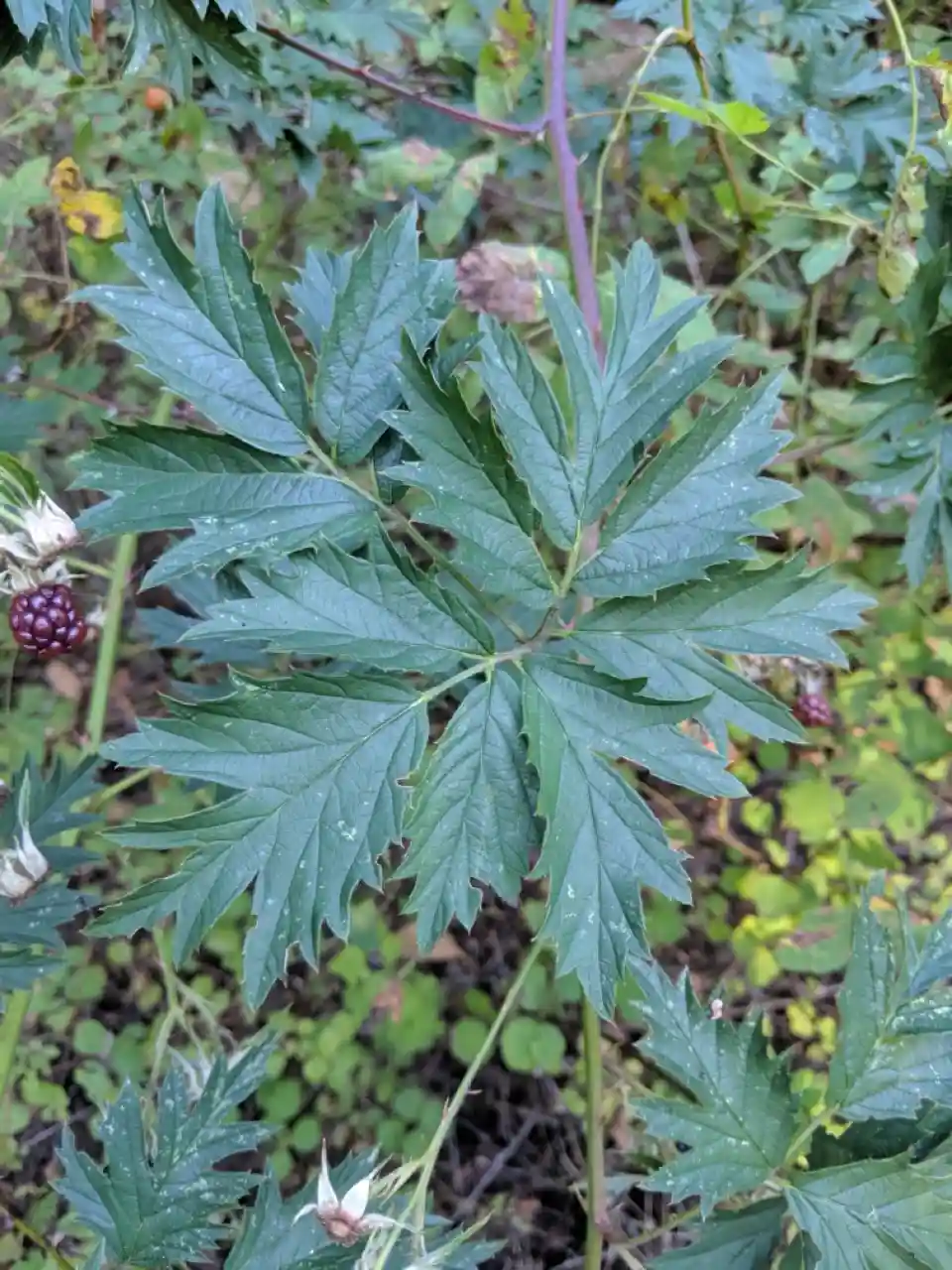
Cutleaf Evergreen Blackberry Rubus laciniatus:
- Bloom Color: White to Soft Pink
- Petals: 3 lobes on top
- Stem: Green to Reddish-Purple, five sides
- Leaflets: Groups of 5 when mature
- Prickles: Straight to slightly curved, stiff, red on base with green tips
- Distinguishing Features: Leaves are very deeply cut with pointed tips
Sources: CWMA, King County
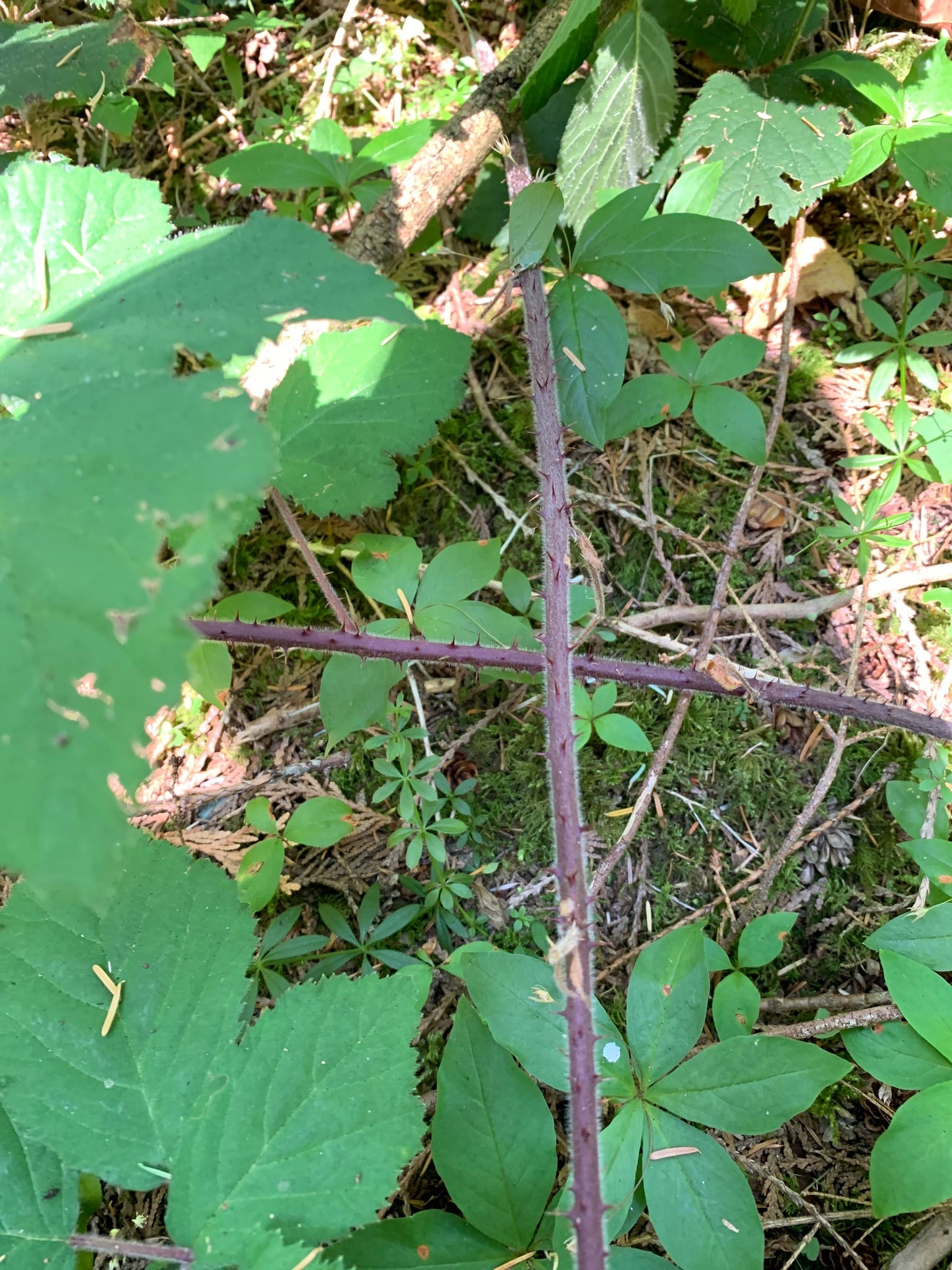
European Blackberry Rubus vestitus:
- Bloom Color: Pink
- Stem: Brownish-Purple-Red, noticeably fuzzy
- Prickles: Small and many
- Distinguishing Features: Long hairs with small orbs at the tip - glands - on the flower cluster on the inflorescence
Sources: Else Mikkelsen, Flora of North America, Benton Soil & Water Conservation District
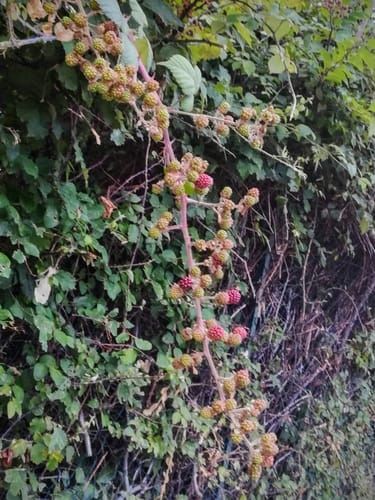
Elmleaf Blackberry Rubus ulmifolius:
Note: Not common in Oregon + Washington but present, more common in California; can hybridize with Himalayan
- Bloom Color: usually Soft to Mid-Pink
- Stem features: fine hairs, white coating
- Leaf features: Very small serrations on edges of leaflets
- Distinguishing Features: May not have prickles; no glands on stems; conical plume-like abundant collections of blooms or berries on fruiting end.
Sources: Berkley, Canadian Journal of Plant Science, Flora of North America
The tricky part: Himalayan Blackberries
Now, here’s where things get tricky: The invasive blackberry commonly referred to as “Himalayan” Blackberry has a few uncertainties and complexities within the plant taxonomy world.
In fact, Brianna Richardson wrote in a 2004 edition of Cal-IPC News: "The Rubus genus is socomplicated that another Latin phrase has also been applied to it: Rubus crux botanicorum, or "Rubus is the botanists’ cross.""
For the person who just wants to know if they have an invasive species or not, I recommend going with Option 1 to keep it simple.
This will essentially combine the three species commonly called Himalayan Blackberry into one. Since they are all non-native to the PNW, your goal of identifying if you have one of them will be accomplished.
For the real plant nerd (I’m there with you friend), expand Option 2 for an in-depth exploration of the total chaos of these plant species.
Throw some appreciation into the tip jar if this resource helped you 🫙
Option 1: Keep it Simple:
Himalayan Blackberry Rubus spp: Rubus fruticosa, Rubus armeniaca, Rubus bifrons
AKA “European Blackberry Complex”
Bloom Color: White to Pink
Distinguishing Features: Large ovate leaflets, stems hairless or with sparse hairs, berry clusters small (unlike Elmleaf Blackberry)
Sources: iNaturalist, Canadian Journal of Plant Science
Option 2: Nerd out:
Alright friends, buckle up. This is where things get fascinatingly complex, but oh so interesting for the plant nerds among us.
First, you’ll notice that many local, state, and national government information sites talk about Himalayan and Armenian Blackberry in an interchangeable way.
For example, King County WA and WMSCD sites often use these terms synonymously.
While this might seem confusing, it actually makes sense because these species share many similar characteristics and invasive qualities.
From a Conservation Perspective: The primary concern isn't necessarily distinguishing between these species, but rather identifying them as non-native invaders to protect our native flora.
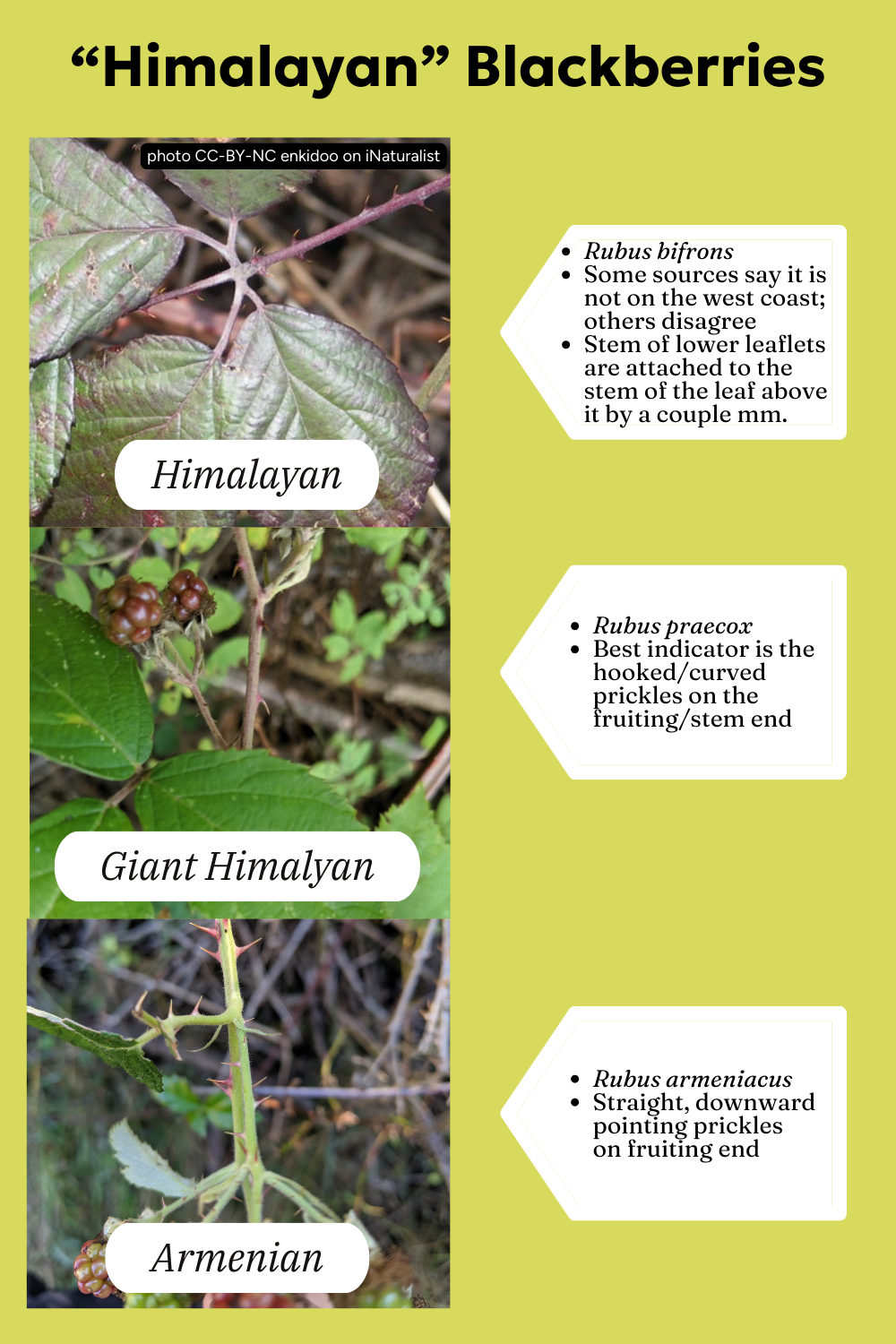
While the three species commonly referred to as "Himalayan" blackberry (Rubus praecox, Rubus bifrons, and Rubus armeniacus) share many similarities, there are some key differences in their appearance and growth characteristics:
- Rubus praecox can be distinguished by its hooked prickles on fruiting stem ends and its ability to get rust disease.
- Rubus bifrons has thin, slender prickles on its first year canes and straight, thin prickles on fruiting stem ends.
- Rubus armeniacus has stout prickles on first year canes that are red at the base and straight prickles on fruiting stem ends.
All three species are considered invasive in the Pacific Northwest and negatively impact native ecosystems. Identifying and removing these species is an important part of land stewardship in the region
Sources: Cal IPC, CWMA, Invasive Plant Science and Management, iNaturalist
If you're like me and love diving into the nuances, let's explore these distinctions further.
Scientific Discussion and Nuances
I stumbled upon this fascinating discussion thread that noted several scientific directories are leaning towards combining both Armenian and Himalayan into the Rubus bifrons species.
In that discussion thread, I learned from “chemistree” that the California Invasive Plants Council distinguishes three species from each other - R. armeniacus, R. bifrons, and a not frequently mentioned R. praecox.
And guess what? They say the R. praecox species is actually quite common in Oregon!
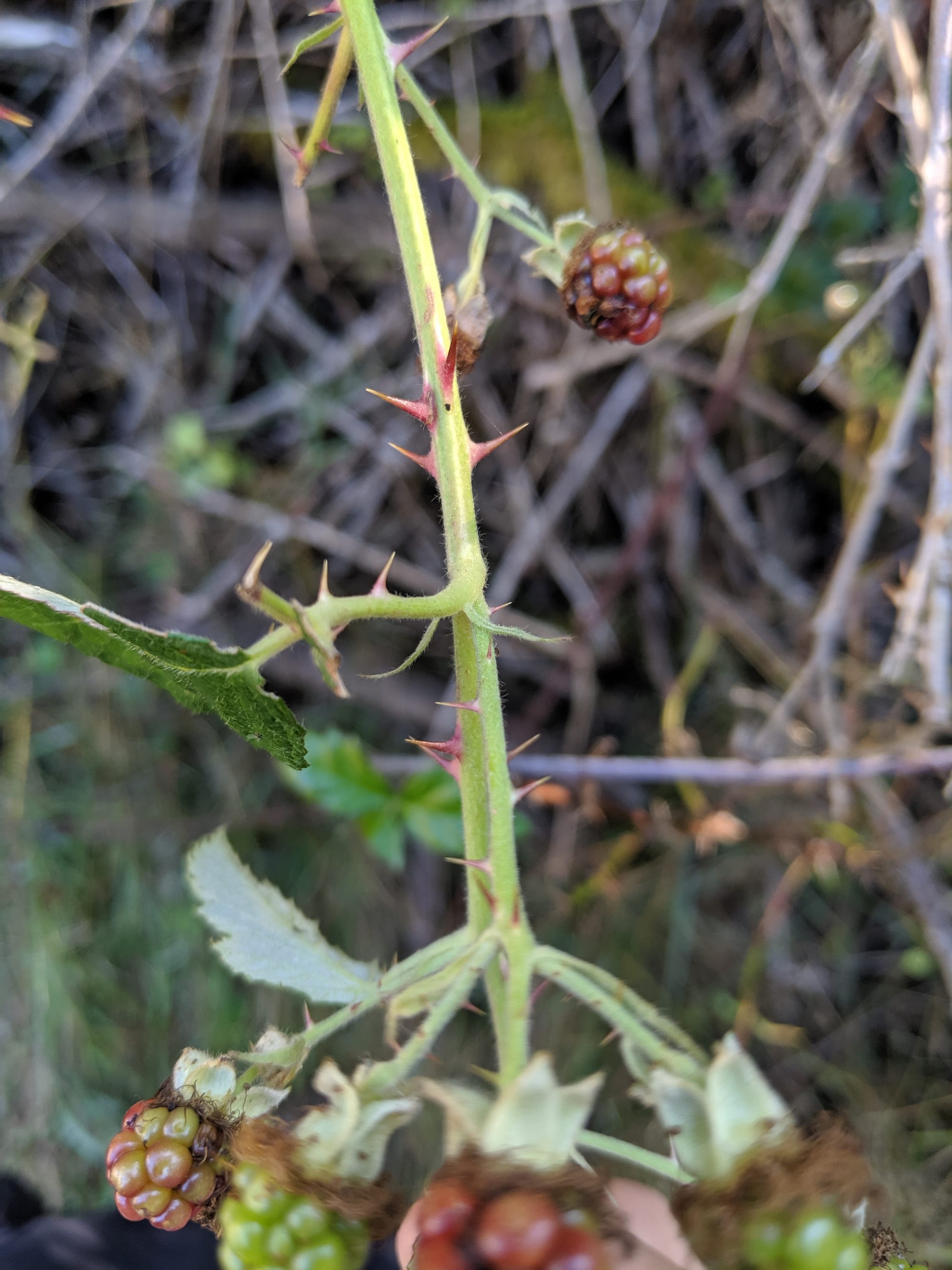
Armenian Blackberry Rubus armeniacus:
- Bloom Color: pale pink, very long stamens compared to style
- Prickles on First Year Stems: stout; red at the base
- Prickles on Fruiting Stem End: straight, pointed downwards*
- Location: Popular on West Coast; PNW, according to USDA Forest Service and BONAP; Kew disagrees only shows in California not OR and WA
Sources: Cal IPC, CWMA, Invasive Plant Science and Management, Mandy Tu
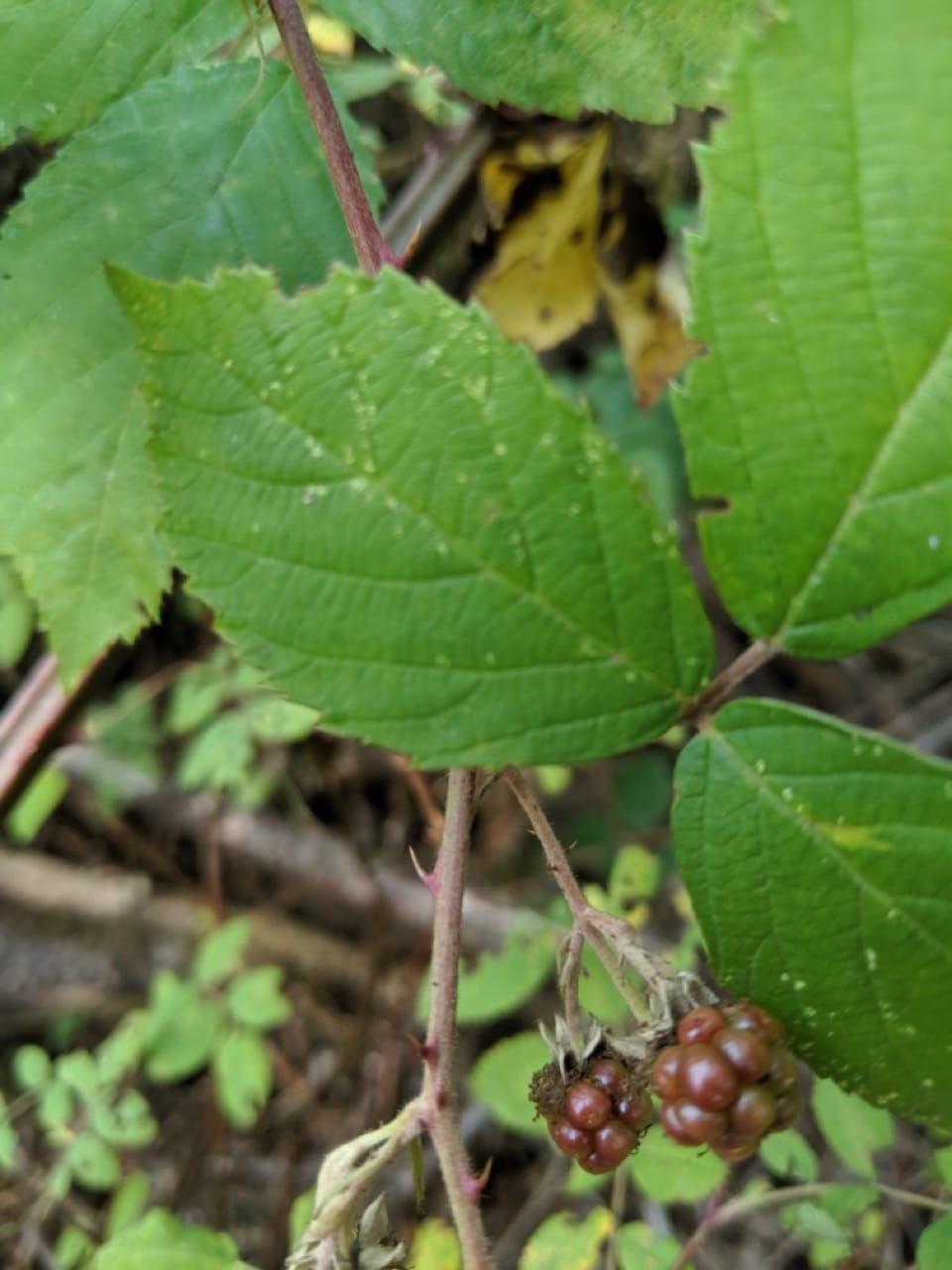
Himalayan Giant Blackberry Rubus praecox; formerly Rubus procerus:
- Bloom Color: white; pale pink
- Prickles on First Year Stems: stout; green or reddish-dark purple
- Prickles on Fruiting Stem End: Hooked*
- Location: Likely common in Oregon, PNW, California, according to cal-ipc.org.
Sources: Cal IPC, Mandy Tu, PNW Herbaria, Invasive Plant Science and Management, PlantNet
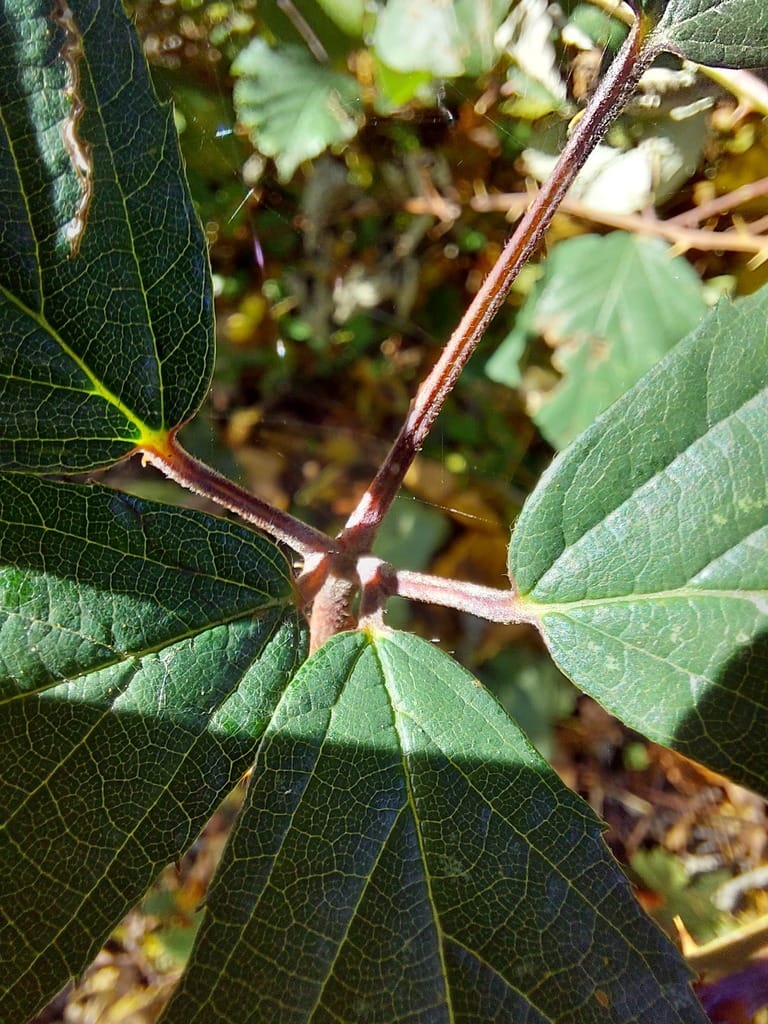
Himalayan Blackberry Rubus bifrons:
- Bloom Color: pale pink; bright pink
- Prickles on First Year Stems: slender, strong, usually dark purple entire or at tip; 10-15 per 5cm.
- Prickles on Fruiting Stem End: thin & straight*, red at base
- Leaves: Stems of the bottom leaflets are attached to the stems of the leaflets above them (unlike the other "Himalayan" species, which have thei stem attached to the main leaflet stem). This is by a few milimeters and can be difficult to distinguish if you don't know to look for it.
- Location: Not common on West Coast; PNW, according to USDA Forest Service and BONAP; Kew says the opposite
Sources: Cal IPC, CWMA, enkidoo, iNaturalist
Cross-Breeding Challenges
One thing to know about blackberries - and all Rubus species - is that they easily crossbreed. This creates hybrids that can display characteristics of both parent species. As if we needed more complication to this genus!
Blackberry ID and Land Stewardship
“Himalayan blackberry is listed as one of the 40 most invasive woody angiosperms worldwide and is considered one of the worst weeds in southern Australia and western Oregon "- Canadian Journal of Plant Science
Himalayan Blakcberries negatively impact the surrounding landscape because they:
- crowd out native vegetation that wildlife depend on
- prevent important trees, such as ponderosa pine and garry oak, from thriving due to its shade-forming canopy
- have shallow roots compared to native species with long roots, on stream banks they can hasten erosion instead of prevent it
- infiltrate farms, causing yield losses and increased management costs; spreads a disease that damages grapes on vineyards
- infiltrate forests, causing habitat change and increased management costs
- create a barrier that large animals cannot move through
- animals do not graze on leaves/stems usually (except for goats and deer) because of its prickles
- birds do not like to nest in it and are displaced
Some positives:
- they’re tasty
- bees and butterflies like their pollen
- important for honey making
- small mammals shelter in the thickets
- fruits provide forage to birds and wildlife
Source: Canadian Journal of Plant Science
The abundance of wild blackberries in the Pacific Northwest can make the months of July, August, and September feel like a never-ending dessert. Just take a stroll through any natural area, and you’re likely to find brambles loaded with fruit.
When you learn to identify these tasty berries, you can then become an active participant in ecological conservation in your own backyard.
Throw some appreciation into the tip jar if this resource helped you 🫙

